




Operation Sindoor: A Defining Chapter in India’s Military History
One year after Operation Sindoor, India is reflecting on a military campaign that many analysts believe transformed the country’s strategic posture and demonstrated the rise of technology-driven warfare.
On the first anniversary of the operation, Prime Minister Narendra Modi and Defence Minister Rajnath Singh paid tribute to the armed forces, describing the mission as a defining example of India’s military precision, preparedness, and self-reliance.
But perhaps the most memorable line associated with Operation Sindoor came from Indian Air Force Air Marshal AK Bharti, who said:
“Our job is to hit the target, not to count the body bags.”
The statement captured a new Indian military doctrine — one built around precision strikes, coordinated operations, rapid escalation control, and technological superiority.
The Operation That Changed the Strategic Equation
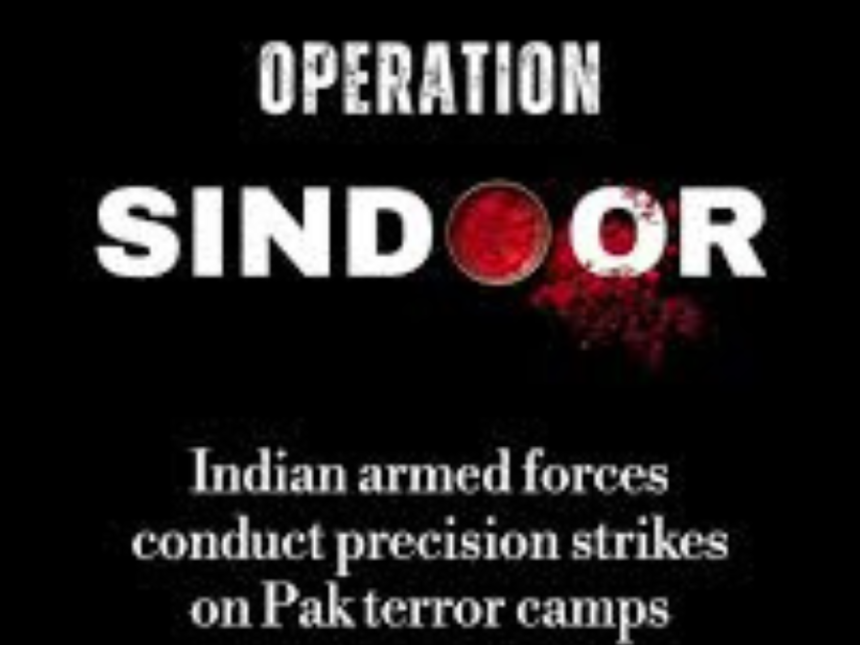
Launched on May 7, 2025, Operation Sindoor began as a calibrated response after attacks on innocent civilians in Pahalgam. India’s initial objective was limited: strike terror launchpads and prevent further escalation.
However, when Pakistan reportedly attempted retaliatory actions targeting Indian cities and military facilities, India dramatically expanded the scope of its response.
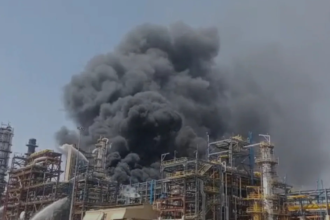
In the early hours of May 10, 2025, the Indian Air Force carried out coordinated strikes on multiple Pakistani military installations, including key air bases at:
- Rafiqui
- Murid
- Nur Khan
- Rahim Yar Khan
- Sukkur
- Chunian
- Pasrur
- Sialkot
Military analysts stressed that these were not symbolic targets but critical operational nodes central to Pakistan’s air operations and defence network.
Precision Warfare on Display
According to strategic assessments and satellite analysis, India deployed advanced precision-guided air-launched weapons designed to inflict maximum operational disruption with controlled escalation.
The strikes reportedly:
- Disabled strategic runways and aircraft operation zones
- Disrupted command-and-control systems
- Damaged logistics and communication infrastructure
- Reduced Pakistan’s aerial response capability within hours
Satellite imagery later indicated damage to Mushaf Air Base in Sargodha, an area often linked by strategic observers to sensitive underground infrastructure near the Kirana Hills region.
Although Air Marshal Bharti publicly denied any direct strike on nuclear-linked facilities, analysts interpreted the operation as a deliberate strategic signal touching the deeper layers of deterrence.
A report by The New York Times quoted a former US official familiar with Pakistan’s nuclear programme, suggesting the strikes could be seen as a warning directed at Pakistan’s strategic establishment.
India’s Technology-Driven Warfare Era
What made Operation Sindoor stand apart from previous military confrontations was the integration of technology across every layer of the operation.
India reportedly combined:
- Real-time intelligence and surveillance systems
- Precision-guided munitions
- Loitering strike drones
- Electronic warfare capabilities
- Integrated command-and-control architecture
- Multi-force operational coordination
Defence experts described the mission as a clear demonstration of “network-centric warfare,” where intelligence, surveillance, air power, drones, and battlefield communication systems operate as one synchronized combat structure.
Independent assessments from European defence think tanks suggested India achieved temporary air superiority while carefully managing escalation thresholds.
PM Modi Salutes Armed Forces
Marking one year of Operation Sindoor, Prime Minister Narendra Modi praised the courage and professionalism of India’s armed forces and called the operation a symbol of India’s unwavering fight against terrorism.
In a message shared on social media, the Prime Minister said:
“A year ago, our armed forces displayed unparalleled courage, precision and resolve during Operation Sindoor. They gave a fitting response to those who dared to attack innocent Indians at Pahalgam. The entire nation salutes our forces for their valour.”
Also Read :- https://x.com/narendramodi/status/2052231018845790432?ref_src=twsrc%5Etfw%7Ctwcamp%5Etweetembed%7Ctwterm%5E2052231018845790432%7Ctwgr%5Eb46135044a6278ba5579a1ca7fadcfd423057623%7Ctwcon%5Es1_c10&ref_url=https%3A%2F%2Fwww.pmindia.gov.in%2Fen%2Fnews_updates%2Fpm-salutes-armed-forces-on-one-year-of-operation-sindoor%2F
Also Read :- https://x.com/narendramodi/status/2052245643125739840?ref_src=twsrc%5Etfw%7Ctwcamp%5Etweetembed%7Ctwterm%5E2052245643125739840%7Ctwgr%5Eb46135044a6278ba5579a1ca7fadcfd423057623%7Ctwcon%5Es1_c10&ref_url=https%3A%2F%2Fwww.pmindia.gov.in%2Fen%2Fnews_updates%2Fpm-salutes-armed-forces-on-one-year-of-operation-sindoor%2F
He added that the operation reflected India’s firm response to terrorism and highlighted the professionalism, preparedness, and coordinated strength of the armed forces.
The Prime Minister also emphasized the growing “jointness” among India’s military branches and said the mission showcased the strength gained through India’s push for self-reliance in defence manufacturing.
Reaffirming India’s security doctrine, Modi stated that the country remains committed to defeating terrorism and dismantling its support networks.
As a symbolic gesture of respect, the Prime Minister urged citizens to change their display pictures on social media platforms such as X, Facebook, Instagram, and WhatsApp using an image shared by him in honour of the armed forces.
A Turning Point in India’s Military Doctrine
One year later, Operation Sindoor is increasingly viewed not merely as a military retaliation, but as a strategic turning point in India’s defence evolution.
The operation demonstrated that future warfare would no longer depend solely on troop strength or prolonged mobilisation. Instead, India signalled that speed, precision, intelligence integration, drones, and indigenous defence technology would shape its battlefield strategy.
For many observers, Operation Sindoor marked the moment India publicly showcased a new era of warfare — one where technology, coordination, and strategic clarity define military power.