





Glory Review: A Strong Start Undone by Predictable Storytelling
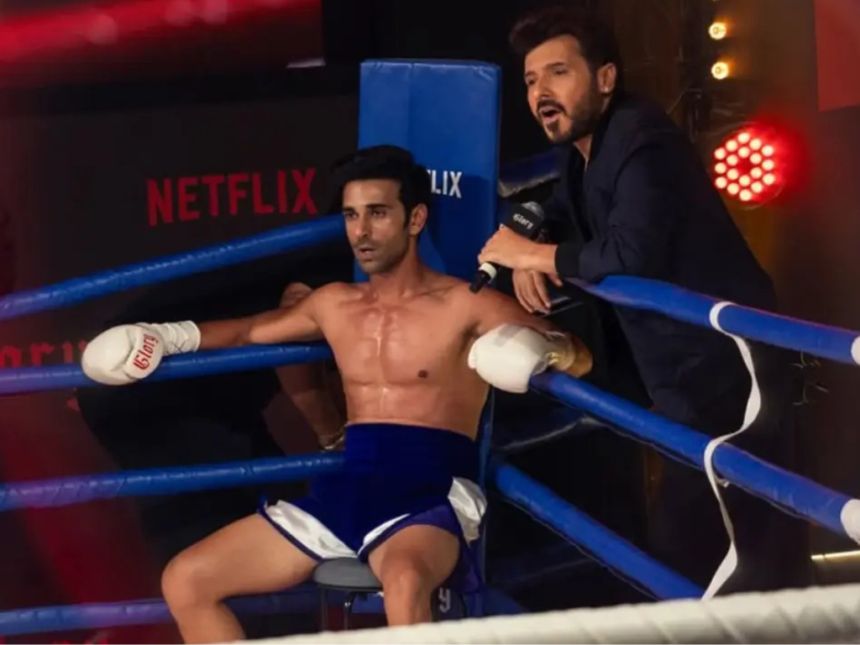
Glory, the latest crime drama on Netflix, arrives with a compelling premise and a solid cast led by Divyenndu Sharma, Pulkit Samrat, and Suvinder Vicky. Set in the fictional boxing hub of Shaktigarh, the series attempts to fuse sports drama with a murder mystery—but while it starts with promise, it gradually slips into familiar territory.
A gripping setup in a gritty world
The story centers on two estranged brothers, Dev and Ravi, who return to their hometown following the brutal murder of their sister. Their already strained relationship is further tested when another death shakes the community—Nihal Singh, an Olympic hopeful boxer trained by their father.
Shaktigarh itself emerges as one of the show’s strongest elements. Inspired by North India’s boxing and wrestling belts, the setting feels textured and authentic. From worn-out training arenas to dusty streets, the series effectively builds a lived-in world. The boxing culture is not just aesthetic—it drives the characters’ ambitions, rivalries, and the violence that underpins the narrative.
A promising premise that loses momentum
Created by Karan Anshuman, Glory initially hints at a layered narrative combining sports, family conflict, and crime investigation. Multiple suspects and power structures—rival boxing camps, local authorities, and entrenched social systems—add intrigue in the early episodes.
However, once the investigation takes center stage, the storytelling becomes formulaic. The plot leans heavily on genre tropes—red herrings, predictable twists, and conveniently timed revelations. What begins as a potentially complex mystery soon turns into a straightforward whodunnit.
A mystery that reveals itself too soon
The biggest drawback of Glory is its lack of suspense. The narrative doesn’t sustain intrigue long enough, and seasoned viewers may find themselves anticipating key developments far too early. Instead of layering motivations or subverting expectations, the show follows a well-trodden path.
Emotional arcs—particularly the grief over the murdered sister and the strained father-son dynamics—are present, but they often feel underdeveloped due to the predictable progression of the story.
https://x.com/np_nationpress/status/2050131147708068254?s=20
https://x.com/AdanTrad/status/2050164308739244224?s=20
Performances rise above the material
If Glory remains engaging, it is largely because of its cast. Divyenndu brings a brooding intensity to Dev, while Pulkit Samrat balances vulnerability and inner conflict in Ravi. Their chemistry anchors the series, providing emotional weight even when the writing falters.
Suvinder Vicky delivers a commanding performance as the father and coach, a figure whose past decisions loom large over the unfolding tragedy.
Off-screen, Vicky has spoken about his philosophy of success—defining “glory” not as fame or awards, but as mastery of one’s craft. Meanwhile, Pulkit Samrat has reflected on his career journey, noting that true success would be when comparisons shift in his favor, and he becomes the benchmark rather than the one being measured.
Final verdict
Glory had all the ingredients of a standout series: a unique setting, a strong ensemble, and an intriguing blend of genres. While it succeeds in creating an immersive world and delivering compelling performances, it ultimately falls short due to its reliance on familiar storytelling patterns.
It’s a watchable series, especially for fans of crime dramas, but one that never quite reaches the heights it promises in its opening moments.