




The tragic death of former Miss Pune winner Twisha Sharma continues to raise difficult questions as shocking claims and counterclaims emerge from both families involved in the case.
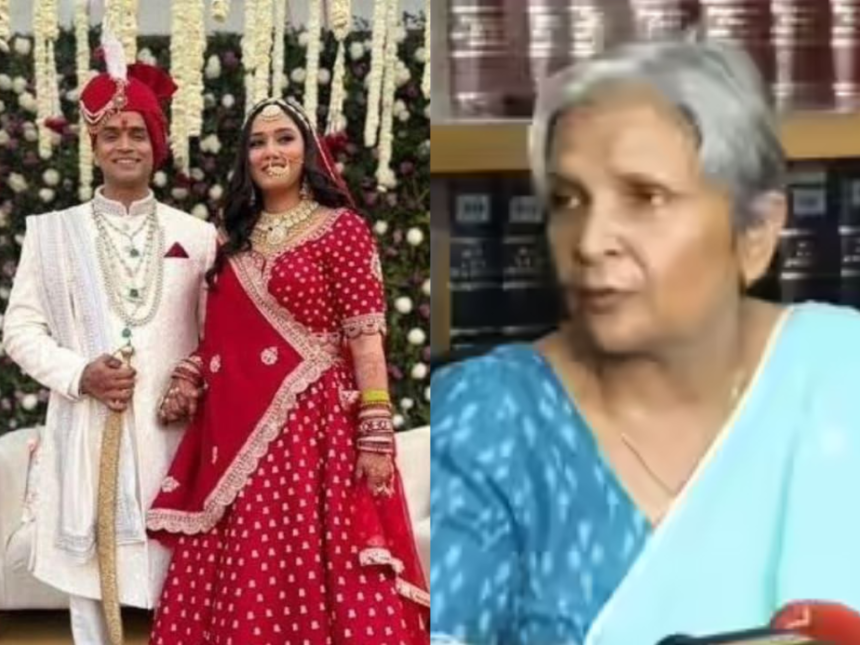
Twisha, 33, was found dead at her matrimonial home in Bhopal on May 12, only five months after marrying Bhopal-based lawyer Samarth Singh. Since then, the case has sparked nationwide attention, with allegations of dowry harassment, emotional torture, mental health struggles, and family conflict dominating public discussion.
Now, Twisha’s mother-in-law, retired judge Giribala Singh, has publicly defended her son and family while making several serious claims about Twisha’s emotional and psychological condition.
Speaking to NDTV, Giribala Singh described Twisha as someone who allegedly struggled emotionally and required “continuous monitoring.” She claimed Twisha’s behavior would suddenly change from happiness to sadness and alleged that she often resisted taking medication.
According to Singh, Twisha would react strongly whenever family members reminded her about medicines, allegedly saying:
“Don’t monitor me” and “don’t force me.”
The retired judge also claimed that Twisha showed signs of conflicting emotions and unstable behavior, describing it as if “two personalities” existed within her.
Recalling the night of May 12, Singh stated that the family had spent the evening together watching television before Twisha went upstairs to the terrace area. Later, she was allegedly found hanging in her room.
In one of the most controversial remarks made during the interview, Singh said:
“There were not three people in the house that night, there was a fourth person inside her mind.”
Her comments have now sparked intense reactions online, with many people debating whether the family is trying to explain the tragedy through mental health claims while investigations into allegations of harassment continue.
At the same time, Twisha’s parental family continues to strongly reject the accusations made against her. They have alleged that Twisha was unhappy in her marriage and had repeatedly expressed emotional distress in conversations with her mother.
WhatsApp chats reportedly accessed by media outlets reveal Twisha asking her mother to take her back home to Noida. In one emotional message, she allegedly wrote:
“Please come and pick me up from here.”
According to her family, Twisha had also spoken to her mother shortly before her death and discussed the harassment she was facing.
The case became even more complicated after Giribala Singh made additional claims involving Twisha’s past, her career in the glamour industry, and alleged mental health struggles. She accused Twisha’s parents of pushing her into modeling and acting at a young age and claimed that Twisha herself had become emotionally troubled over time.
Meanwhile, Twisha’s family believes these statements are attempts to shift attention away from the ongoing investigation into alleged dowry harassment and emotional abuse.
Police are now examining:
- CCTV footage
- forensic evidence
- digital chats
- phone call records
- statements from both families
As investigations continue, Bhopal Police have also issued a lookout notice against Samarth Singh and announced a reward related to locating him.
The case has now become much more than a legal investigation. It has turned into a larger public conversation about marriage, mental health, emotional abuse, dowry allegations, and the way personal tragedies unfold under public scrutiny.
While one side claims Twisha was emotionally struggling and needed psychiatric care, the other insists she was a victim of harassment inside her marriage.
The truth behind what really happened on May 12 remains under investigation.
But the emotional intensity of the case has already left the country deeply divided, with many people questioning whether women’s cries for help are often dismissed until it becomes too late.