




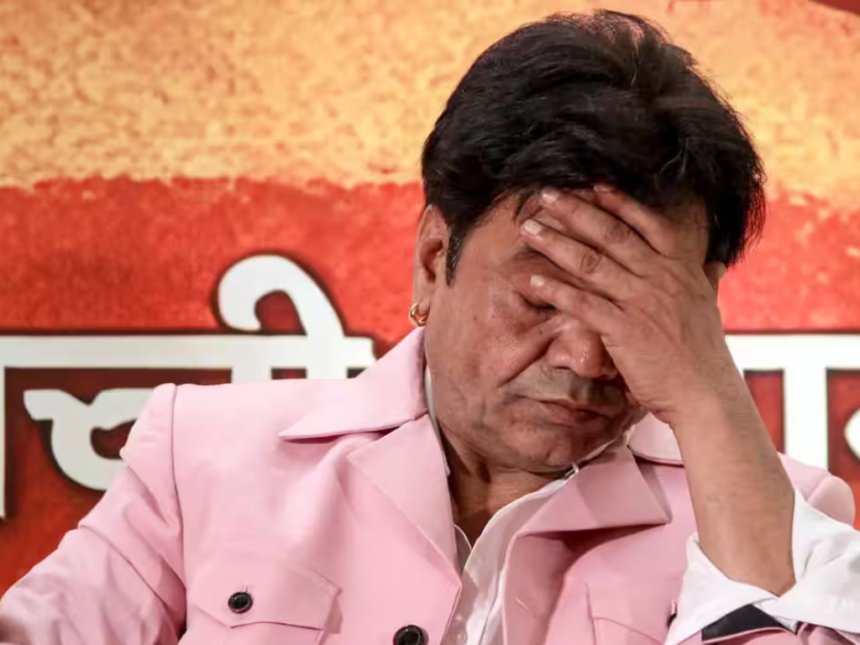
Bollywood actor Rajpal Yadav has been given one final two-week opportunity by the Supreme Court to deposit at least ₹2 crore with the Supreme Court Registry in connection with his long-running financial dispute with a private complainant.
A bench headed by Chief Justice of India Surya Kant expressed doubts about whether Yadav would follow through on his latest commitment, considering his previous conduct in the case. During the hearing, the Chief Justice made a sharp remark about the actor, saying, “He’s perfect in doing drama and acting in Bollywood, he’s doing same thing in Court also.”
Despite the court’s concerns, Yadav was granted two more weeks after his lawyer assured the bench that he would deposit at least ₹2 crore within the deadline. He has also been asked to provide surety for the remaining amount.
The Supreme Court has continued the protection granted to Yadav against arrest until the next hearing, which is scheduled for October 5. However, the actor has been directed to surrender his passport during this period.
What is Rajpal Yadav’s financial case?
The dispute dates back to 2010, when Yadav borrowed ₹5 crore from M/s Murali Projects Pvt Ltd for his directorial film Ata Pata Laapata. The film failed at the box office, and the actor was unable to clear the loan. With interest accumulating over the years, the outstanding amount eventually rose to nearly ₹9 crore.
During an earlier hearing, Yadav’s lawyer told the court that around ₹4.25 crore had already been paid to the complainant. However, the matter continued because the full amount had not been cleared.
In 2018, a magistrate court convicted Rajpal Yadav and his wife, Radha, in the case and sentenced them to six months in jail. The conviction was upheld by the sessions court in 2019, after which Yadav approached the Delhi High Court.
In June 2024, the Delhi High Court temporarily suspended his sentence and directed him to make “sincere and genuine measures” to repay the nearly ₹9 crore dues.
The case took another turn in February when Yadav surrendered to Tihar Jail authorities after failing to clear the required dues. He was later granted interim bail on February 16 after depositing ₹1.5 crore, following confirmation from the complainant’s lawyer.
Yadav subsequently sought additional time to arrange the remaining amount, but the Delhi High Court rejected his request for a 30-day extension and reserved its verdict.
Now, with the Supreme Court granting him what has been described as a final opportunity, the actor has two weeks to deposit at least ₹2 crore. The next hearing on October 5 is expected to be important in determining what happens next in the long-running financial and legal dispute.
For Rajpal Yadav, the immediate challenge is no longer just about his Bollywood career. He must now convince the court that he will honour the financial commitment made on his behalf and comply with its directions.