




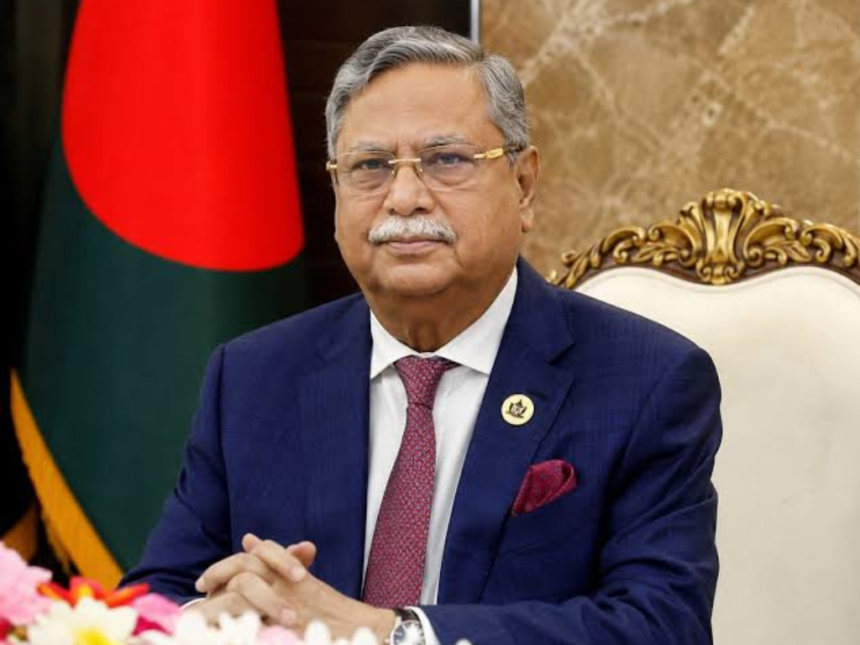
Bangladesh has witnessed a major political development as President Mohammed Shahabuddin has resigned from his position, according to reports from local media. His resignation comes at a crucial time when the country is navigating a period of political uncertainty and heightened public attention.
Shahabuddin, who assumed office as the 22nd President of Bangladesh in April 2023, stepped down after serving for over three years. Reports citing sources, including Reuters, stated that the President cited health-related reasons for leaving office.
The resignation has created a temporary leadership transition at the highest constitutional level, with attention now turning toward the process of appointing his successor.
Health Reasons Cited Behind Resignation
According to reports, Mohammed Shahabuddin’s decision to resign was linked to health concerns. The President had been carrying out his constitutional duties despite the challenging political atmosphere in the country.
While the presidency in Bangladesh is largely a ceremonial position, the office plays an important role in maintaining constitutional continuity, especially during political transitions.
Speaker May Assume Presidential Responsibilities
Following the resignation, Bangladesh’s constitutional framework will determine the next steps. Until a new President is elected, the Speaker of the Jatiya Sangsad (Parliament) is expected to take on presidential responsibilities.
The temporary arrangement is meant to ensure that the functioning of the state continues smoothly while the process of selecting a new President takes place.
The election of a new President will become a key political event, as the country prepares for another transition at the top level of government.
Shahabuddin’s Journey to the Presidency
Before becoming President, Mohammed Shahabuddin had a long career in public service. He served as a judge and later worked with the Anti-Corruption Commission of Bangladesh.
He was elected President by lawmakers in February 2023 and officially took charge in April of the same year, succeeding Abdul Hamid, who completed two terms in office.
During his presidency, Shahabuddin’s role focused mainly on constitutional responsibilities, including appointing officials, approving legislation, and representing Bangladesh at official events.
Resignation Comes During Sensitive Political Period
The timing of Shahabuddin’s resignation has drawn attention as Bangladesh continues to experience political challenges and debates over governance and national stability.
The country has witnessed intense political developments in recent times, with opposition parties, civil society groups, and citizens raising concerns over democratic processes and government accountability.
Although the President does not hold executive authority over day-to-day governance, the office carries symbolic importance and can influence political stability during uncertain periods.
What Happens Next?
With Shahabuddin stepping down, Bangladesh will now focus on ensuring a smooth constitutional transition.
The immediate priorities for authorities will include:
- Maintaining continuity in government operations
- Beginning the process of selecting a new President
- Ensuring constitutional procedures are followed during the transition
The resignation marks a significant moment in Bangladesh’s political landscape, and the selection of the next President will be closely watched both within the country and internationally.