




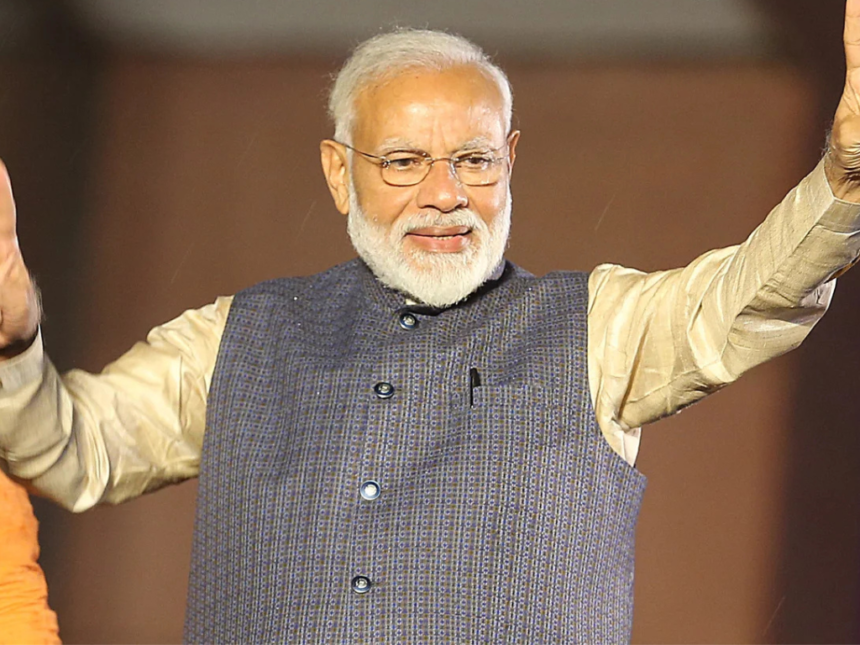
Prime Minister Narendra Modi has etched his name into India’s political history by becoming the country’s longest-serving elected Prime Minister in an uninterrupted tenure. On June 10, 2026, he completed 4,399 consecutive days in office, surpassing the record previously held by India’s first Prime Minister, Jawaharlal Nehru.
The milestone marks the culmination of a political journey that began far from the corridors of power.
Born on September 17, 1950, in Vadnagar, Gujarat, Narendra Modi came from a modest background. He has often spoken about helping his family by selling tea during his childhood, a story that later became a significant part of his public image.
Modi’s political career started at a young age when he became associated with the Rashtriya Swayamsevak Sangh (RSS). Over the years, he worked as an organisational leader before joining the Bharatiya Janata Party (BJP), where he gradually rose through the ranks because of his strategic planning and grassroots work.
A major turning point came in 2001 when he was appointed Chief Minister of Gujarat. He remained in the position for nearly 13 years and won multiple state elections. During his tenure, Gujarat witnessed rapid industrial growth and infrastructure development, helping establish Modi as a prominent national leader.
In 2014, Narendra Modi led the BJP to a historic victory in the Lok Sabha elections, becoming India’s 14th Prime Minister. The election campaign, centred around development and governance, earned massive public support and gave the BJP a majority in Parliament.
After assuming office, his government launched several flagship initiatives, including the Swachh Bharat Mission, Digital India, Make in India, Jan Dhan Yojana, Startup India, and Skill India. These programmes aimed to improve sanitation, expand financial inclusion, encourage entrepreneurship, strengthen digital infrastructure, and create employment opportunities.
In 2019, Modi returned to power with an even bigger mandate. During his second term, his government introduced several major policy decisions, including the abrogation of Article 370, the Citizenship Amendment Act, and efforts to strengthen India’s defence and infrastructure sectors.
His tenure also saw India navigate the COVID-19 pandemic, with large-scale vaccination drives and healthcare initiatives. Internationally, he focused on strengthening ties with major global powers while promoting India’s role in forums such as the G20, BRICS, and the Quad.
In 2024, Modi secured a third consecutive term as Prime Minister, becoming one of the few leaders in independent India to achieve such a feat. His continued leadership further cemented his place in the country’s political landscape.
Throughout his years in office, Narendra Modi has remained one of India’s most influential and widely discussed political figures. Admirers credit him with driving economic reforms, infrastructure expansion, and raising India’s global profile, while critics have debated several of his government’s policies and decisions. Regardless of political viewpoints, his long and uninterrupted tenure represents a significant chapter in Indian democracy.
With 4,399 consecutive days as Prime Minister, Narendra Modi’s journey from a small town in Gujarat to the highest elected office in the country has become one of the most remarkable political stories in modern India. His latest milestone adds another historic record to a career that has shaped Indian politics for more than two decades.