




Orange Cap, High Strike Rate & a Point Made: KL Rahul’s Resurgent IPL Season Sends a Clear Message to Selectors
KL Rahul last featured in a T20 International for India in 2022, after which he gradually slipped out of contention in the shortest format. The primary concern around his exclusion has consistently been his strike rate — a metric that has become increasingly decisive in modern T20 cricket, where acceleration often matters as much as accumulation.
Despite his reputation as one of Indian cricket’s most technically gifted and reliable batters, Rahul’s approach in T20Is was often viewed as too measured for a format that demands relentless intent from ball one. As a result, he found himself on the sidelines of India’s T20 setup, with selection debates repeatedly circling back to the same question: could he adapt to the evolving demands of the game?
Fast forward to IPL 2026, and Rahul appears to have delivered a strong counter-argument on the field.
Now representing the Delhi Capitals, the wicketkeeper-batter has been in sensational form, currently emerging as the tournament’s leading run-scorer. His numbers this season have been striking — an average of 54 coupled with a strike rate exceeding 180 — a combination that directly addresses the long-standing criticism of his T20 tempo.
His latest match-winning performance against the Rajasthan Royals only amplified that narrative. Not only did Rahul guide his side to victory, but he also walked away with the Player of the Match award, reinforcing his consistency in high-pressure situations.
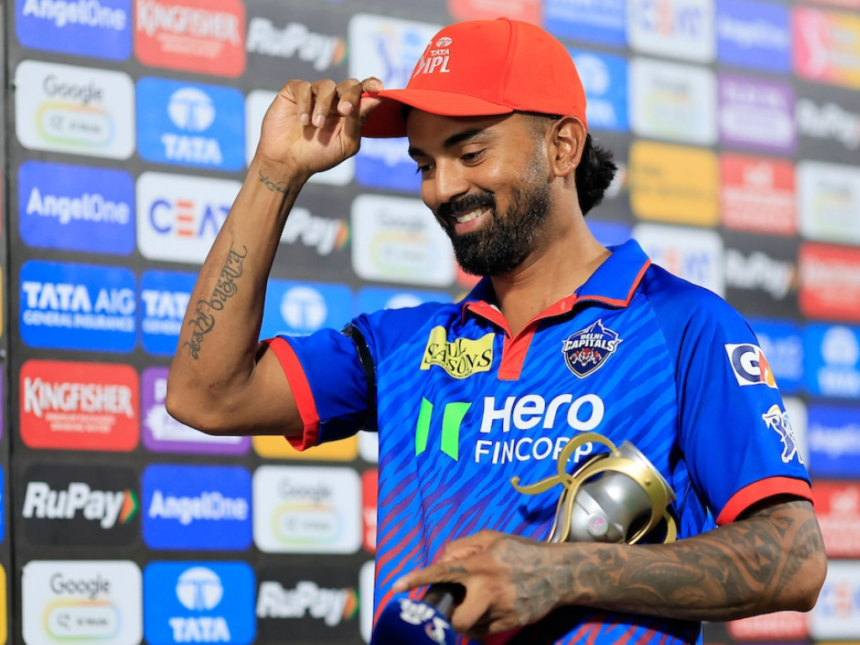
At the post-match presentation, Rahul’s moment with the Orange Cap — awarded to the tournament’s highest run-getter — stood out symbolically. He was seen exchanging his Delhi Capitals cap for the Orange Cap, smiling as he addressed the media, a quiet but telling visual of his current form and confidence.
When asked about what satisfaction meant to him at this stage of his career, Rahul kept his focus on impact over milestones.
He emphasised that while personal numbers matter, team victories remain the ultimate goal, adding that the true joy of scoring runs comes only when it contributes to wins. Reflecting on recent matches, he noted that Delhi Capitals had been competitive even in defeats but admitted they had failed to capitalise at key moments — something the team had addressed through honest internal discussions.
Importantly, Rahul highlighted the urgency of T20 cricket, stating that the format does not allow second chances and that teams must seize decisive moments rather than let them slip.
However, the most talked-about moment came when he was directly asked about his personal satisfaction this season. Rahul’s response was short but loaded with intent: “The strike rate.”
He acknowledged that strike rate had been a recurring talking point over the past few years and credited his recent transformation to conscious effort and adaptation. More importantly, he underlined that his current approach is aligned with both modern T20 requirements and team needs.
For a player long associated with elegance, control, and accumulation, Rahul’s evolution this season has been significant. With consistent high-impact innings and a dramatically improved scoring tempo, he has effectively reignited the conversation around his place in India’s T20 plans.
While national selection remains a separate debate, his message this IPL season is difficult to ignore: the strike rate concerns that once defined him are no longer the same story.