




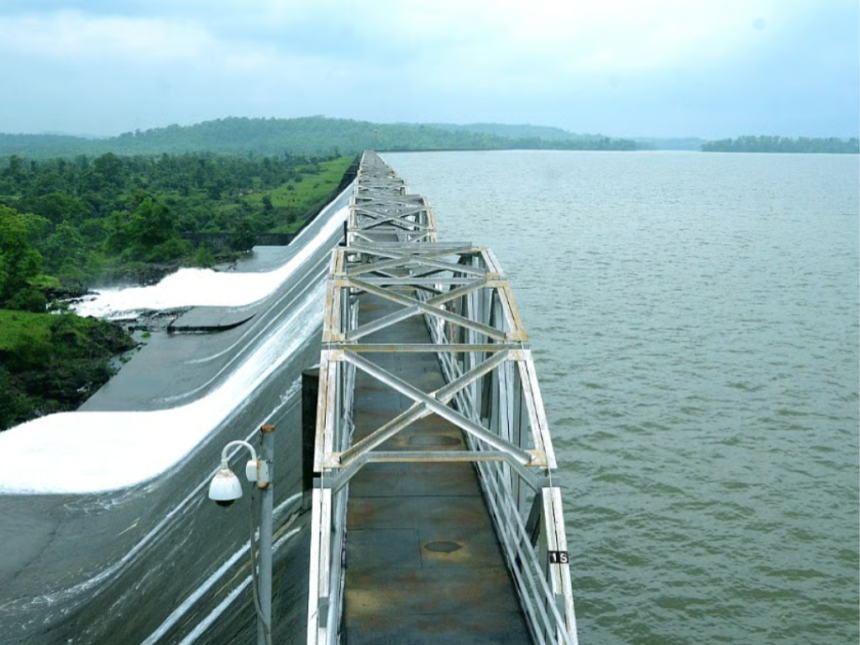
After a slow start to the monsoon, Mumbai is finally witnessing encouraging signs as continuous rainfall has begun replenishing the city’s crucial drinking water reservoirs. The latest data released by the Hydraulic Engineer’s Department at 6 am shows that the combined water stock in the seven lakes supplying water to Mumbai has risen to 1,03,871 million litres.
According to the report, the current storage stands at 7.18% of the total live storage capacity. Although the figure is still relatively low compared to the amount required to meet the city’s annual water demand, officials say the steady increase is a positive development and reflects the impact of the recent spell of heavy rain across the catchment areas.
Mumbai relies entirely on seven reservoirs—Bhatsa, Upper Vaitarna, Middle Vaitarna, Modak Sagar, Tansa, Vihar, and Tulsi—for its daily drinking water supply. Together, these lakes provide water to over 20 million residents across the city and suburbs. Every monsoon, civic authorities closely monitor the water levels in these reservoirs as they play a crucial role in determining the city’s water availability throughout the year.
In the weeks leading up to the monsoon, lake levels had dropped significantly due to the intense summer heat and delayed rainfall. The recent showers, however, have started reversing the trend, bringing much-needed relief to both residents and authorities.
Experts believe that if the monsoon remains active through July and August, reservoir levels are expected to rise rapidly. Historically, the majority of Mumbai’s annual water storage is replenished during these two months, making them the most critical period for the city’s water security.
While the improving water stock is welcome news, civic officials continue to urge citizens to use water responsibly. The Brihanmumbai Municipal Corporation (BMC) regularly reviews reservoir levels and rainfall patterns before deciding whether any precautionary water cuts are required. At present, the gradual increase in storage has eased immediate concerns, but authorities will continue monitoring the situation closely.
Meanwhile, the same rainfall that is filling the lakes has also brought its share of challenges. Several parts of Mumbai witnessed waterlogging, traffic congestion, and delays in local train and road transport due to intermittent heavy showers. Emergency teams remain on alert as the India Meteorological Department (IMD) has predicted more rainfall in the coming days.
For Mumbai, the rise in reservoir levels is more than just a statistic—it is a vital indicator of the city’s water security. With over 1.03 lakh million litres now stored in the seven lakes, the monsoon has finally begun providing the relief that millions of Mumbaikars were waiting for. If rainfall continues at the current pace, the city’s reservoirs are expected to witness a substantial increase in the weeks ahead, ensuring a more secure water supply for the rest of the year.