




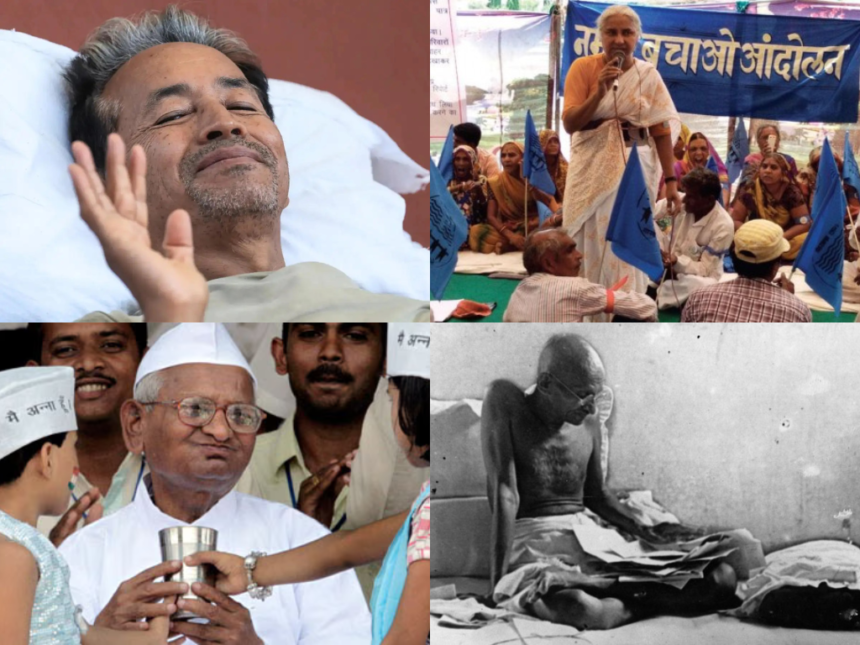
Hunger strikes have been one of the most powerful forms of peaceful protest in India’s history. From freedom fighters demanding justice to activists fighting for social reforms, these fasts have often captured the attention of the entire nation and forced governments to respond.
- Anna Hazare’s Anti-Corruption Movement (2011)
- Sonam Wangchuk’s Hunger Strike (2026)
- Medha Patkar’s Narmada Bachao Andolan Protest
- Mahatma Gandhi’s 21-Day Fast for Social Reform
- Mamata Banerjee’s Singur Hunger Strike (2006)
- Potti Sriramulu’s Fast for Andhra State (1952)
- Swami Nigamananda’s Environmental Protest (2011)
- Bhagat Singh and Jatin Das’s Jail Hunger Strike (1929)
- The Continuing Legacy of Hunger Strikes
While some hunger strikes resulted in policy changes and political transformations, others ended in tragedy. Even today, some protests continue to unfold, keeping important issues in the national spotlight.
Here is a look at some of the hunger strikes that left a lasting impact on India’s history.
Anna Hazare’s Anti-Corruption Movement (2011)
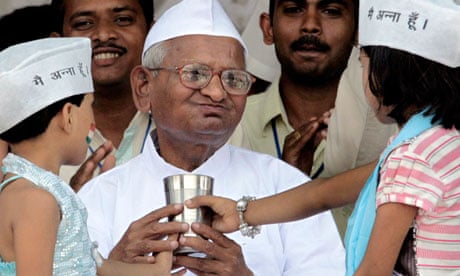
Social activist Anna Hazare’s indefinite hunger strike at Delhi’s Ramlila Maidan became one of the biggest public movements in recent Indian history. Demanding the implementation of the Jan Lokpal Bill to tackle corruption, the protest attracted massive support from across the country.
The movement put immense pressure on the government, leading Parliament to agree in principle to consider key demands related to the Lokpal legislation. Following the development, Anna Hazare ended his fast after 13 days.
Sonam Wangchuk’s Hunger Strike (2026)

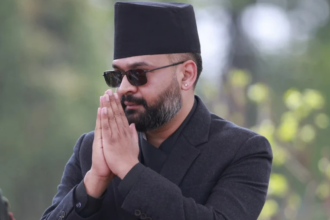
Education reformer and innovator Sonam Wangchuk’s ongoing indefinite hunger strike has once again brought the power of peaceful protest into focus. He began his fast demanding accountability over examination-related concerns and seeking reforms in India’s education system.
As the protest entered its third week, Wangchuk’s health became a major concern. Doctors reported significant weight loss and warned that continuing the fast could further affect his condition. Despite appeals to prioritise his health, Wangchuk has remained determined to continue his protest and participate in the planned march to Parliament.
Medha Patkar’s Narmada Bachao Andolan Protest
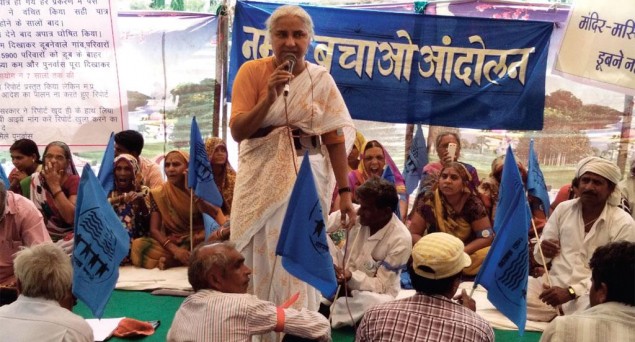
Environmental activist Medha Patkar’s hunger strike against the increase in the height of the Sardar Sarovar Dam highlighted the struggles of thousands of displaced families.
She argued that many affected people had not received proper rehabilitation and compensation. The protest gained nationwide attention, and after intervention from the Supreme Court and assurances regarding rehabilitation, she ended her fast.
Mahatma Gandhi’s 21-Day Fast for Social Reform
Mahatma Gandhi used hunger strikes as a powerful tool during India’s freedom struggle and social reform movements. One of his significant fasts was aimed at fighting caste discrimination and promoting the upliftment of Dalits.
The 21-day fast brought national attention to the issue of untouchability and strengthened Gandhi’s campaign for social equality.
Mamata Banerjee’s Singur Hunger Strike (2006)
Before becoming West Bengal’s Chief Minister, Mamata Banerjee launched a hunger strike against the acquisition of farmland in Singur for the Tata Nano automobile project.
The protest became a major political turning point in the state. It strengthened opposition against the Left Front government and played an important role in shaping West Bengal’s political landscape.
Potti Sriramulu’s Fast for Andhra State (1952)

Potti Sriramulu’s hunger strike remains one of the most significant examples of a protest that changed India’s political map.
Demanding a separate state for Telugu-speaking people, Sriramulu continued his fast until his death. His sacrifice led to widespread protests across the country and eventually resulted in the creation of Andhra State in 1953, followed by the linguistic reorganisation of Indian states.
Swami Nigamananda’s Environmental Protest (2011)

Swami Nigamananda undertook a hunger strike against illegal mining activities along the Ganga river near Haridwar. His protest focused on protecting the environment and preserving the river ecosystem.
After fasting for 115 days, he passed away, bringing national attention to concerns surrounding illegal mining and environmental damage.
Bhagat Singh and Jatin Das’s Jail Hunger Strike (1929)
During the freedom struggle, revolutionary Bhagat Singh and other inmates launched a hunger strike in Lahore Jail to protest against the poor treatment of Indian prisoners compared to British prisoners.
The protest became a defining moment in India’s independence movement. Jatin Das, one of the participants, died after fasting for 63 days, turning the hunger strike into a symbol of sacrifice and resistance.
The Continuing Legacy of Hunger Strikes
From political reforms and social justice movements to environmental campaigns and freedom struggles, hunger strikes have repeatedly shaped India’s public discourse. They have given ordinary citizens, activists, and leaders a way to challenge powerful institutions through non-violent resistance.
While the outcomes of these protests have varied, their impact on India’s political and social history remains undeniable.