

Lalit Modi Reveals IPL Was Meant to Be an Independent Company, Not a BCCI Subsidiary
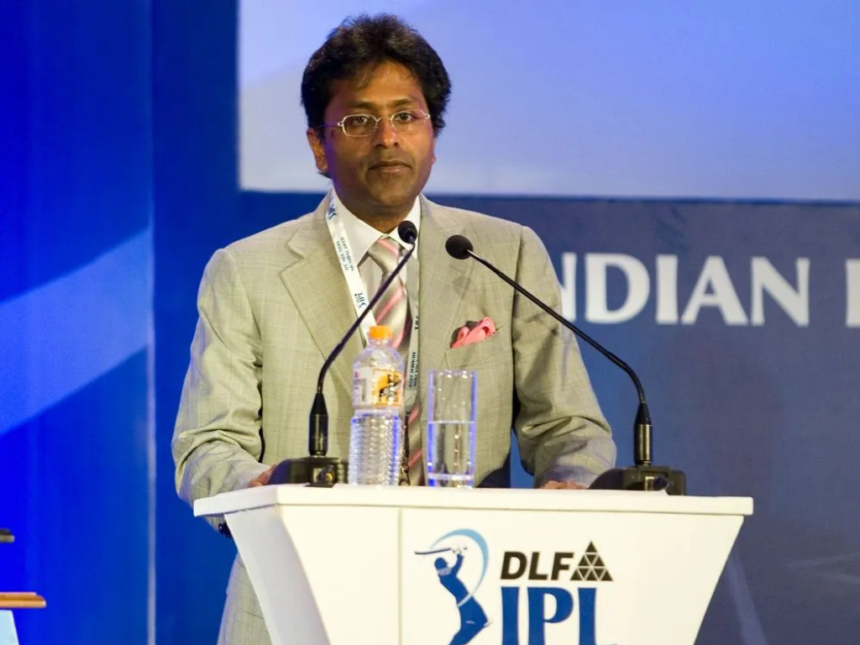
Former Lalit Modi, the architect of the Indian Premier League, has revealed that his original proposal was for the IPL to operate as an independent entity, rather than a subsidiary of the Board of Control for Cricket in India. Modi claims that had his plan been implemented, the league could have evolved into a self-sustaining global ecosystem.
Speaking to Sportstar, Modi explained that his proposal, initially approved on September 13, 2007, envisioned the IPL as a company where franchise owners sat on the board, controlling operations much like the National Football League (NFL) in the United States. “It was set up with the owner sitting on the board and controlling it like the NFL. I will reveal that constitution one day, but that is actually the fact of what was approved in the Special General Meeting prior to the press conference that I held,” he said.
However, Modi said his proposal faced strong resistance and was ultimately rejected in late 2007 during meetings in Jaipur. “Thereafter, it was changed in November or December 2007, where others got involved and said that this can’t be done,” he added.
Modi believes that if the IPL had followed his original structure, it would have become “untouchable” in the sports world. “Had the original structure remained, with owners represented on the board and the league controlling its own operations, the IPL would by now have been an ecosystem unto itself. We would be controlling everything and marketing our own product through our own streaming system globally by now,” he said.
Launched in 2008 with eight franchises, the IPL has grown to become one of the world’s richest sports leagues, with studies ranking it second only to the NFL in terms of annual revenue. Two new teams were added in 2022, further expanding the league’s footprint.
Modi’s revelation sheds light on the origins of one of cricket’s most successful commercial ventures and raises questions about how the league’s structure could have shaped its current global dominance differently.
As fans continue to follow IPL 2026, Modi’s comments have reignited discussions about ownership, governance, and the potential of independent sporting ecosystems in India.