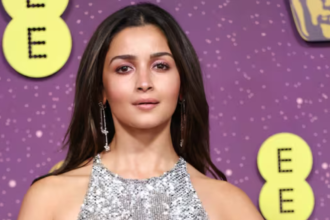



The Delhi High Court has directed the removal of obscene and pornographic content featuring actor Janhvi Kapoor from online platforms, while stopping short of ordering a blanket ban on fan pages and other unauthorised material.
Janhvi had approached the court seeking protection of her personality and publicity rights, alleging that her name, image and likeness were being misused commercially across thousands of webpages and social media posts.
Court draws a line between harmful content and fan pages
While hearing the case, the court acknowledged that clearly obscene and offensive material involving the actor cannot be allowed to remain online. However, it also noted that every unauthorised use of a celebrity’s name or image cannot automatically be treated as unlawful.
The court pointed out that fan pages can contain admiration, criticism, commentary and satire. Such expressions, it observed, are connected to the right to free speech and cannot simply be removed because they use a celebrity’s name or image.
Justice Anup Jairam Bhambhani reportedly cautioned against taking an approach that could end up restricting legitimate online expression. “We are not the conscience keepers of the nation. Solution may be worse than the problem,” he observed, highlighting the importance of protecting free speech.
‘You don’t want fans? It is the digital world’
The judge also made a pointed observation about the realities of being a public figure in the internet age.
“You don’t want fans? It is the digital world. No comments, no URLs… You will find yourself living in a cave,” Justice Bhambhani said.
The remarks underline the difficulty celebrities face when trying to control how their identity is used online. While actors have the right to protect their personality from exploitation and offensive misuse, the court indicated that this right cannot become a tool to silence genuine public discussion.
Janhvi’s personality rights plea
Janhvi’s legal action reportedly covered more than 5,000 webpages and social media posts that allegedly used her identity without authorisation. Her plea sought protection against the commercial exploitation of her name, photograph, likeness and other aspects associated with her public persona.
The case comes amid a growing number of legal battles involving celebrities and the unauthorised use of their images online. With artificial intelligence, deepfakes and social media making it easier to manipulate and reproduce a person’s identity, courts are increasingly being asked to balance personality rights with freedom of expression.
A balance between privacy and free speech
The Delhi High Court’s approach highlights an important distinction: protecting a celebrity from obscene or exploitative content does not necessarily mean removing every piece of content that uses their image or name.
For public figures like Janhvi, the internet can be both a powerful platform and a difficult space to control. The court’s observations suggest that while clearly harmful and offensive material can be taken down, fan discussions, criticism and satire may continue to receive protection as forms of free expression.
The case could therefore have wider implications for how Indian courts deal with celebrity personality rights in the rapidly changing digital landscape.