




The Cockroach Janta Party (CJP) held its second round of talks with the Central government on July 24, just hours after activist Sonam Wangchuk ended his 26-day hunger strike following written assurances from the Centre.
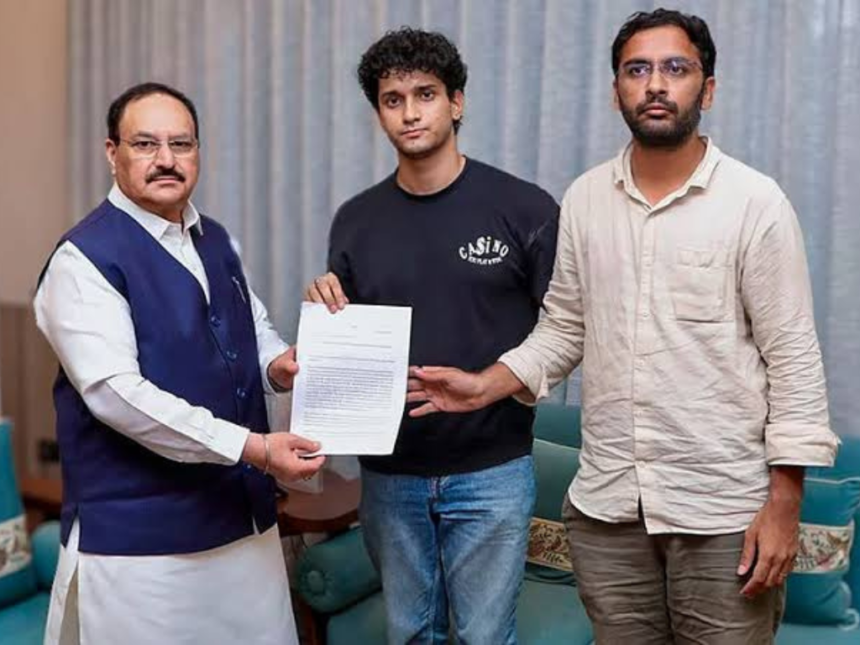
The meeting took place at the Constitution Club of India, where CJP spokespersons met Union Health Minister JP Nadda and Minister of State in the Prime Minister’s Office Jitendra Singh. The discussions lasted for nearly two hours and focused on the students’ key demands and proposed reforms to India’s examination system.
According to the CJP, the talks revolved around its three primary demands along with five suggested reforms aimed at making the examination process more transparent and accountable.
One of the major issues discussed was the party’s demand for the resignation or removal of Union Education Minister Dharmendra Pradhan over the alleged NEET paper leak controversy. The CJP said the government has sought more time to respond to this demand, but the party made it clear that it has not softened its stand and will continue to press for Pradhan’s removal.
The student group, however, said the meeting yielded some positive developments. According to the CJP, the Centre gave in-principle approval to two of its demands—providing compensation to the families of NEET aspirants who allegedly died by suicide and withdrawing FIRs and legal cases registered against students who participated in the protests.
Both sides are expected to hold another round of discussions in the coming days.
The latest meeting comes after an earlier round of talks held on July 20, during which CJP representatives claimed they had been kept under virtual detention. Following that experience, the student body insisted that future meetings should take place at a neutral venue, leading to Friday’s discussions at the Constitution Club.
Meanwhile, the Centre has already announced several measures in response to the controversy, including plans to introduce a law with stricter punishment for examination paper leaks, the establishment of fast-track courts for such cases, and changes in the senior leadership of the Education Ministry.
Despite these announcements and Sonam Wangchuk ending his hunger strike, the CJP has made it clear that its protest movement will continue.
The organisation said it will not call off demonstrations until its core demands are fully addressed, particularly its demand for the resignation of the Union Education Minister and comprehensive reforms to the country’s examination system.
With another round of talks expected soon, both the government and student representatives are likely to continue negotiations as efforts are made to find a resolution to the ongoing education crisis.