




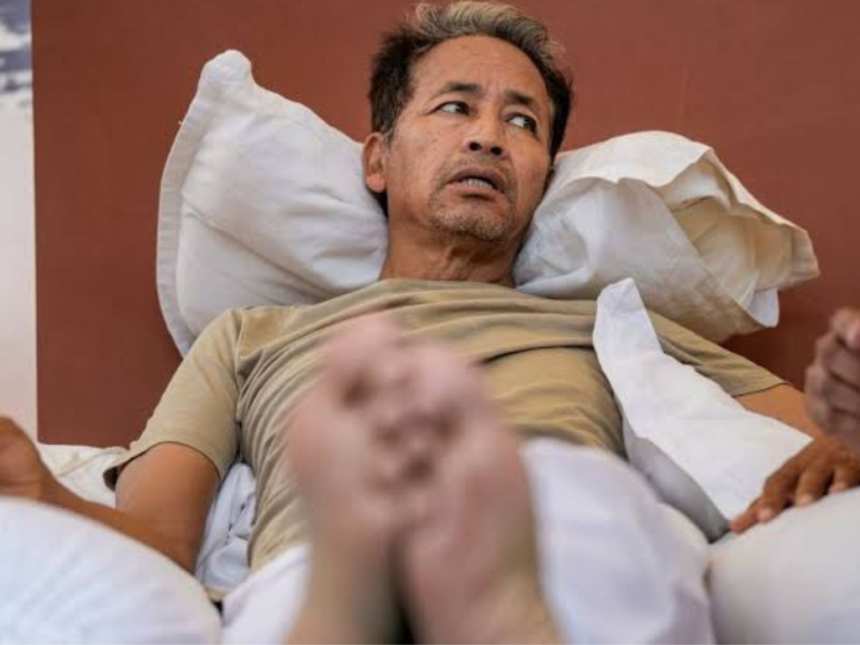
Climate activist and education reformer Sonam Wangchuk’s indefinite hunger strike entered its 19th day on Thursday, with growing concerns over his health prompting the Delhi High Court to step in. Hearing a petition seeking urgent medical intervention, the court directed the government to closely monitor Wangchuk’s health every day, stressing that “the life of every citizen is precious.”
The court observed that the government has a responsibility to protect lives and said that all necessary efforts should be made to safeguard Wangchuk’s health. It also noted that any medical intervention, if required, should be carried out based on the assessment and recommendations of doctors.
Delhi High Court Orders Daily Health Checks
During the hearing, the Delhi High Court instructed government authorities to ensure that Wangchuk’s health is monitored on a daily basis. The court emphasised that preserving human life must remain a priority and directed officials to take appropriate action if doctors feel medical treatment becomes necessary.
Representing the government, Solicitor General Tushar Mehta informed the court that authorities are ready to provide medical assistance whenever doctors recommend it.
Doctors Raise Concern Over Health
Medical professionals monitoring Wangchuk’s condition have expressed concern over the effects of his prolonged fast.
According to the latest health update, the activist has now lost around 9 kilograms since beginning his hunger strike. His current weight has reportedly dropped to 56.9 kg, and doctors say he has also experienced noticeable muscle loss.
His latest medical readings showed:
- Weight: 56.9 kg
- Blood Sugar: 80 mg/dL
- Pulse Rate: 72 beats per minute
- Blood Pressure: 105/61 mmHg while lying down and 101/65 mmHg while sitting
- Oxygen Saturation: 97%
Doctors described Wangchuk as physically weak and warned that the coming days could pose greater health risks if the fast continues.
Wangchuk Says He Will Continue the Fast
Despite repeated appeals from political leaders, celebrities, and supporters asking him to end his hunger strike, Wangchuk has made it clear that he has no immediate plans to do so.
In a video message shared on Wednesday, he acknowledged that his muscles had become weak but insisted that his vital organs were functioning normally.
“Yes, there is weakness and my muscles are getting weak, but my heart and core are still fine,” he said.
He also reassured supporters that his medical reports indicate he can continue for some more days and urged people not to worry excessively about his health.
Instead of requesting him to end the protest, Wangchuk appealed to supporters to participate in the proposed “Chalo Sansad” peaceful march to Parliament on July 20, saying the movement needs greater public participation to send a strong message.
Political Leaders Extend Support
As the protest entered Day 19, leaders from across the political spectrum continued expressing solidarity with Wangchuk.
Delhi AAP chief Saurabh Bharadwaj announced that he would visit Jantar Mantar to support the activist and urged citizens to join him.
Former Delhi Chief Minister Arvind Kejriwal is also expected to visit the protest site later in the day.
Farmer leader Rakesh Tikait has announced his support by planning to meet Wangchuk at Jantar Mantar.
Congress MP Shashi Tharoor also backed the movement, stating that the Opposition would raise the students’ concerns during the upcoming Parliament session while urging the government to engage in dialogue with Wangchuk.
Meanwhile, MNS chief Raj Thackeray expressed concern over the activist’s deteriorating health and criticised the government’s handling of the situation.
Movement Continues
The Cockroach Janta Party (CJP) has also organised a one-day nationwide mass hunger strike in solidarity with Wangchuk and has called upon students and supporters across the country to participate peacefully.
As Sonam Wangchuk’s protest enters another critical phase, attention remains focused on both his health and the government’s response. With the Delhi High Court now directing daily medical monitoring, the coming days are expected to be crucial in determining the course of both the hunger strike and the larger movement he is leading.