




April 15 is observed as Titanic Remembrance Day, marking the anniversary of one of the most tragic maritime disasters in history—the sinking of the RMS Titanic in the early hours of April 15, 1912.
The British passenger liner, RMS Titanic, struck an iceberg in the North Atlantic Ocean late on the night of April 14, 1912, and sank around 2:20 a.m. on April 15 during its maiden voyage from Southampton to New York. More than 1,500 passengers and crew lost their lives in the disaster, making it one of the deadliest peacetime maritime tragedies ever recorded.
Over a century later, the event continues to be remembered globally not only through historical accounts but also through cultural retellings that have kept its legacy alive for modern audiences.
When History Met Cinema
A major reason the Titanic disaster remains deeply embedded in popular memory is the impact of director James Cameron’s 1997 film Titanic. Starring Leonardo DiCaprio and Kate Winslet, the film blended a fictional love story with real historical events, bringing emotional depth and renewed attention to the tragedy.
The film’s depiction of the ship’s final moments closely follows historical accounts, including the breaking apart of the vessel and its sinking into the icy Atlantic waters. One particularly notable detail is the ship’s clock stopping at 2:20 a.m., aligning with the documented time of its disappearance beneath the sea.
The Scene That Became a Cultural Phenomenon
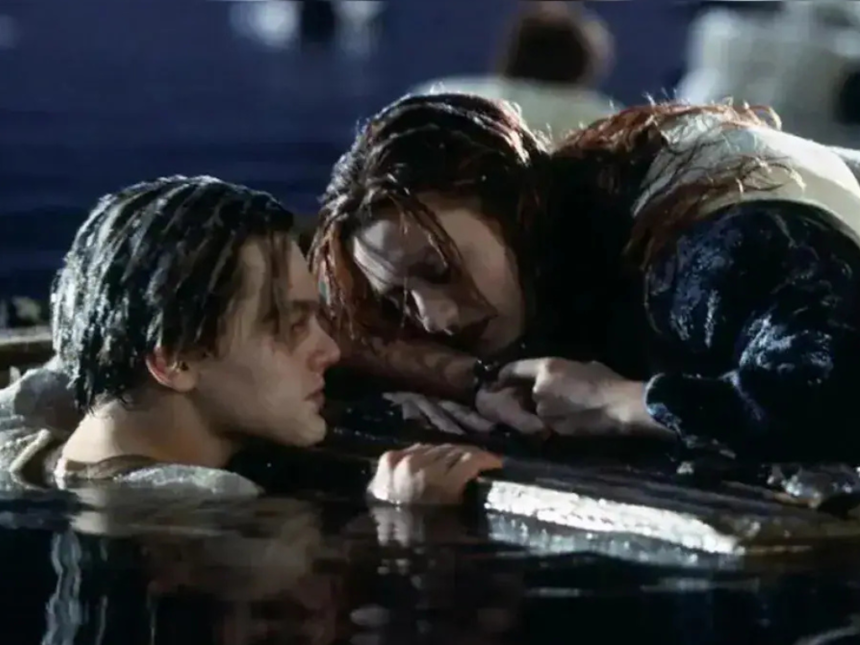
Among the most iconic sequences in the film is the survival moment involving Rose floating on a wooden structure after the sinking, while Jack succumbs to hypothermia. This object—often referred to by audiences as “the door”—has become one of cinema’s most debated props.
The scene has sparked decades of discussion, memes, and reinterpretations, with audiences questioning whether both characters could have survived on the floating debris. While the debate has become a pop-culture staple, its deeper impact lies in how it distills a large-scale tragedy into a deeply personal moment of love, loss, and survival.
Kate Winslet has previously clarified that the object was not actually a door but a piece of set design resembling a broken section of a staircase or bannister, though the cultural identity of “the door” has persisted regardless.
Why the Ending Still Resonates
The film concludes not with destruction, but with memory and reunion. In its final sequence, an elderly Rose envisions a peaceful afterlife aboard the restored Titanic, where she reunites with Jack at the Grand Staircase. Surrounding them are passengers and crew who perished in the sinking, symbolically restoring dignity and presence to those lost.
This artistic choice transforms the narrative from one of tragedy alone into one of remembrance. Instead of focusing solely on death, the film emphasizes legacy, love, and the enduring nature of memory.
More than 110 years after the sinking of the RMS Titanic, and decades after Cameron’s adaptation, the story continues to resonate. As Titanic Remembrance Day is observed each year on April 15, both history and cinema ensure that the lives lost at sea are not forgotten, preserving the Titanic’s legacy across generations.