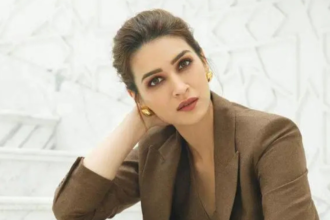






Actor Radhikka Madan has spoken out about the pressure women face to look a certain way, expressing solidarity with Katrina Kaif after the actor faced criticism over her postpartum weight gain. Sharing her own experiences with body-shaming, Radhikka revealed how constant comments about her appearance affected her physical and mental health and eventually changed the way she looked at her body.
- Radhikka Madan Recalls Being Called ‘Too Fat’ After Gaining 15 Kg
- ‘Earlier, I Was Too Fat, Now I Was Too Thin’: Radhikka on Unrealistic Beauty Standards
- Radhikka Madan Backs Katrina Kaif Amid Postpartum Trolling
- How Childhood Conditioning Shapes the Idea of a ‘Perfect Woman’
- Positive Parenting Helped Radhikka Feel Beautiful
- ‘Accept Yourself and Have Fun’: Radhikka’s Message to Young Girls
- A Reminder That Health Matters More Than Appearance
The actor explained that women are often judged regardless of their size. Whether someone is considered overweight, underweight or somewhere in between, society always seems to find something to criticise. Through her personal journey, Radhikka has learned that chasing other people’s expectations can become exhausting, while prioritising health and self-acceptance is far more important.
Radhikka Madan Recalls Being Called ‘Too Fat’ After Gaining 15 Kg
Radhikka opened up about the body-image struggles she experienced while preparing for her films. She revealed that she had gained around 15 kg for Pataakha and was subsequently losing the weight while working on projects such as Shiddat and Angrezi Medium.
During this period, she faced harsh comments about her appearance, including remarks questioning how she could become a heroine while being overweight.
The criticism pushed her to keep losing weight while shooting films back-to-back. However, her efforts eventually took a toll on her health. Radhikka recalled becoming extremely thin and realising that the pressure to change her body was affecting her well-being.
She eventually decided to take a break when she understood that the situation had gone too far.
Her experience highlights the pressure actors, particularly women, can face to maintain a particular appearance. Behind the glamour associated with the film industry, expectations about weight and body shape can create serious emotional and physical challenges.
‘Earlier, I Was Too Fat, Now I Was Too Thin’: Radhikka on Unrealistic Beauty Standards
One of the biggest turning points in Radhikka’s journey came when she realised that changing her appearance would not necessarily stop people from judging her.
She explained that when she was heavier, people criticised her for being too fat. After losing weight, she was told that she had become too thin. There seemed to be no point at which everyone was satisfied.
That realisation made her question why she was trying so hard to please people whose opinions kept changing.
Radhikka eventually shifted her focus from achieving a particular body size to feeling healthy. She said that understanding her own priorities helped her become less affected by criticism.
The actor also acknowledged that negative comments often come from other people’s insecurities. Rather than allowing every opinion to determine her self-worth, she has learned to trust her own understanding of what is best for her.
Her message is simple: a person’s health and happiness should matter more than meeting someone else’s expectations of beauty.
Radhikka Madan Backs Katrina Kaif Amid Postpartum Trolling
Radhikka’s comments come amid criticism directed at Katrina Kaif over her postpartum appearance. The incident has once again brought attention to the scrutiny women face after pregnancy, when their bodies naturally go through changes.
For many women, the period after childbirth can involve physical recovery, emotional adjustments and adapting to a new phase of life. Public criticism about weight can add unnecessary pressure during an already significant transition.
Radhikka’s support for Katrina reflects a wider conversation about why women are expected to look a certain way, even during deeply personal experiences such as pregnancy and motherhood.
Her own experience in the film industry has shown her that body-shaming does not necessarily disappear when someone loses weight. Instead, the criticism can simply take a different form.
The discussion also raises an important question: why are women so frequently expected to explain or defend changes in their appearance?
How Childhood Conditioning Shapes the Idea of a ‘Perfect Woman’
Radhikka also spoke about how beauty standards are introduced at a young age. According to her, girls often grow up seeing a limited image of what an ideal woman is supposed to look like.
She recalled how magazine covers and carefully presented images can create the impression that only a particular type of appearance is considered beautiful.
For a young girl who has facial hair, a unibrow or features that do not match these images, this can lead to feelings of inadequacy. Radhikka explained that such conditioning can make girls believe there is something wrong with them simply because they do not fit an artificial standard.
She believes society needs to recognise that the idea of a perfect woman is often something people are taught to believe in, rather than a standard that naturally exists.
Her comments underline the importance of showing young people a broader and more realistic representation of beauty, one that allows different features, body types and appearances to be accepted.
Positive Parenting Helped Radhikka Feel Beautiful
Interestingly, Radhikka’s childhood experience was not entirely shaped by insecurity. She revealed that she had a unibrow and noticeable body hair during her school years, but her positive upbringing helped her feel confident.
She recalled being encouraged so much by her parents that she grew up believing she was beautiful, even when her appearance did not match conventional beauty standards.
As a result, she did not feel the same need for approval from her friends or other people. She even found herself questioning the attention she received when her appearance changed and others began noticing her differently.
Her experience shows how encouragement at home can influence the way children see themselves. When children feel accepted by their families, they may find it easier to develop confidence without constantly seeking validation from others.
‘Accept Yourself and Have Fun’: Radhikka’s Message to Young Girls
Radhikka acknowledged that accepting oneself is not always easy. Although ignoring online trolls may sound like simple advice, she recognises that it can be particularly difficult for young girls who depend on social media for validation.
With carefully edited photographs and idealised images appearing constantly online, it can become easy to compare one’s real life and appearance with unrealistic representations.
The actor believes that self-acceptance is a journey that can be confusing and unpredictable. Instead of chasing perfection, she encourages people to discover their individuality, appreciate their quirks and understand what makes them different.
She also feels that people should focus on building a stronger relationship with themselves rather than allowing strangers’ comments to dictate how they feel.
For Radhikka, the goal is not simply to love every aspect of one’s appearance all the time. It is about accepting oneself, finding personal confidence and enjoying life without constantly trying to fit into someone else’s idea of beauty.
A Reminder That Health Matters More Than Appearance
Radhikka Madan’s candid account offers an important reminder that body-shaming can affect anyone, regardless of their profession or public image. Her experience of being criticised at different weights taught her that there is no lasting satisfaction in trying to meet every expectation society places on women.
Her support for Katrina Kaif also brings attention to the need for greater sensitivity when discussing women’s bodies, especially after pregnancy.
Ultimately, Radhikka’s message is about putting health, confidence and individuality ahead of unrealistic beauty standards. Women should not have to defend their weight, appearance or personal journeys to satisfy public opinion.
Beauty does not come in one fixed size, and no one should have to compromise their well-being just to fit into someone else’s definition of perfection.