





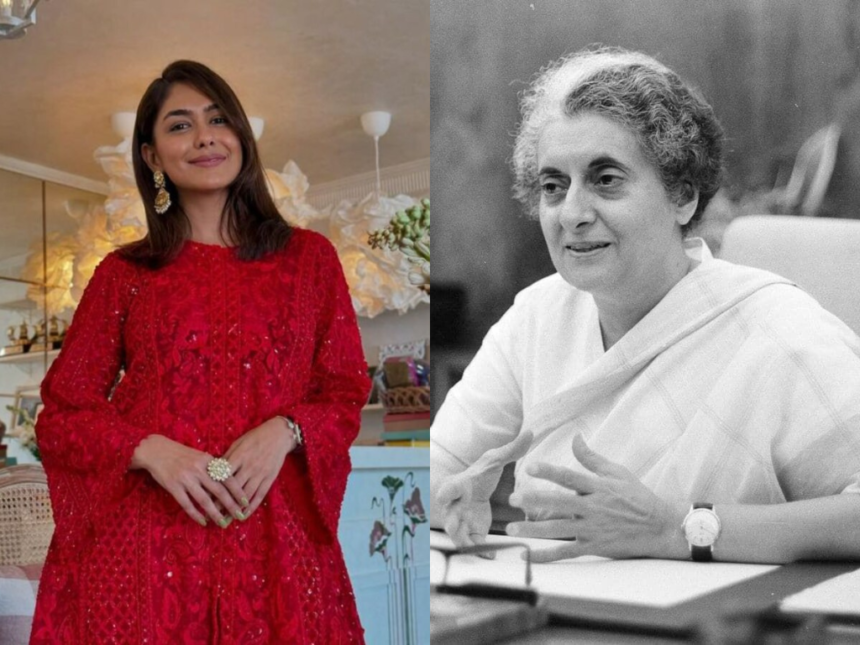
“Same Thinking?” Viral Debate Links Mrunal Thakur and Indira Gandhi Over Gendered Praise
A recent online discussion has drawn an unusual comparison between Mrunal Thakur and former Prime Minister Indira Gandhi after a resurfaced debate on gendered language in praise went viral across social media platforms.
The conversation began after Mrunal Thakur shared a childhood memory in which her father told her, “You are not my daughter, you are my son,” a remark she described as one of the biggest compliments of her life. While she viewed it as a gesture of encouragement, many online users interpreted it differently, saying it reflects a broader societal tendency to equate strength and success with masculinity.
Why the comparison is trending
As the discussion gained traction, users began drawing parallels with Indira Gandhi’s well-known reaction to being described as “the only man in the cabinet.” Unlike the personal and emotional framing of Thakur’s memory, Gandhi’s response was firm—she rejected the remark outright, calling it an insult.
This contrast has now become the centre of online debate, with users questioning whether both reactions actually reflect similar thinking about strength and gender roles, or whether they represent entirely different contexts.
Also Read :-
A post shared by INDIANS (@indians)
Same theme, different interpretations
Supporters of the comparison argue that both instances highlight how women’s achievements are often measured against masculine standards. In both cases, strength is indirectly associated with being “like a man,” whether it is seen as praise or political commentary.
However, others strongly disagree, pointing out the difference in context. Mrunal Thakur’s statement comes from a personal family interaction, where intent was likely affectionate. Indira Gandhi’s experience, on the other hand, was rooted in public political identity, where she actively challenged such labels.
Why the debate is going viral
The contrast has struck a chord online because it sits at the intersection of emotion, identity, and language. Social media users have been sharing clips and quotes side by side, asking whether society still defaults to masculine comparisons when praising women’s strength.
Some users see it as proof of evolving interpretations over time, while others argue it reflects a persistent cultural mindset that has not changed much.
Beyond the viral moment
While the comparison may be trending online, it also raises a broader question: should strength, leadership, and resilience be tied to gender at all? Or are these comparisons simply outdated expressions that continue to linger in everyday language?
Whether seen as similar thinking or entirely different contexts, the debate shows how a single line—spoken in very different settings can spark a much larger conversation about gender, identity, and how society defines strength today.