




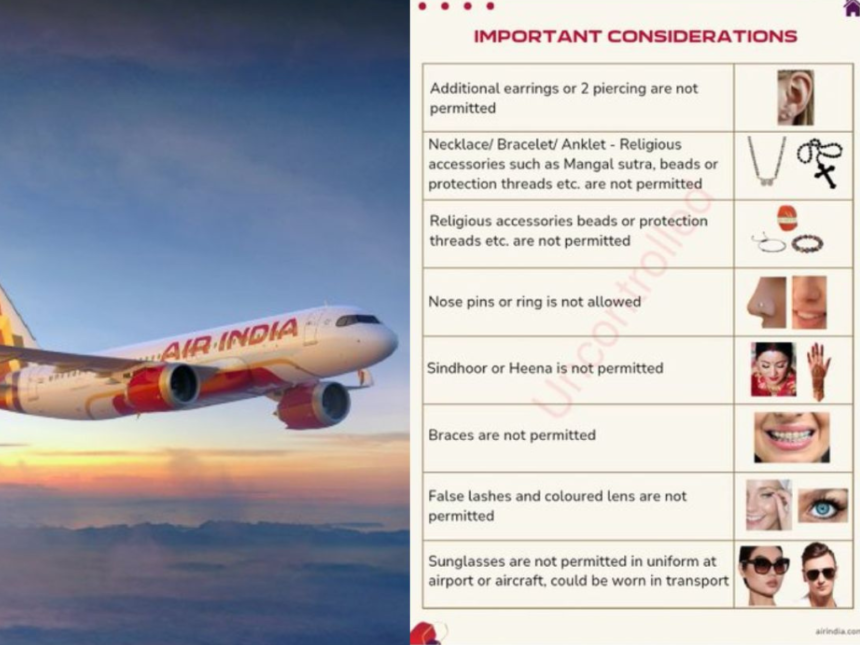
A debate has recently emerged online surrounding Air India after reports and discussions claimed that its grooming guidelines for cabin crew may restrict the visible display of certain religious symbols such as tilak, bindi, or sindoor.
The discussion gained traction on social media, with users questioning whether such standards could potentially limit cultural and religious expression among employees, especially in a diverse country like India. The conversation has also drawn attention due to Air India’s association with the Tata Group, which is often viewed as a brand that represents Indian identity on a global stage.
At the center of the debate are airline grooming and appearance policies, which are common across global aviation carriers. Airlines typically enforce strict guidelines to maintain a uniform and professional appearance among cabin crew, ensuring consistency in branding, safety presentation, and passenger experience. These standards often cover uniforms, hairstyles, makeup, and accessories.
However, the current discussion has highlighted a sensitive balance between maintaining corporate uniformity and respecting individual religious and cultural identity. Critics argue that overly rigid interpretations of grooming norms may unintentionally affect personal expression, while others believe such policies are standard industry practice and not targeted at any specific belief or tradition.
As of now, there has been no confirmed official statement from Air India indicating any blanket restriction on religious symbols. Much of the current debate appears to stem from interpretations of grooming rules and amplified reactions on social media platforms rather than a formally announced policy change.
The issue has sparked broader conversations about inclusivity in workplace environments, especially in customer-facing industries like aviation, where employees represent both the brand and the cultural diversity of the country.
While opinions remain divided, the discussion underscores an ongoing challenge faced by global and national carriers alike—striking the right balance between a consistent professional image and allowing space for personal and cultural identity in the workplace.