

When Riteish Deshmukh called Bhagyashree to discuss his ambitious historical drama Raja Shivaji, he expected a conversation. What he got instead was an instant yes even before he could share the story.
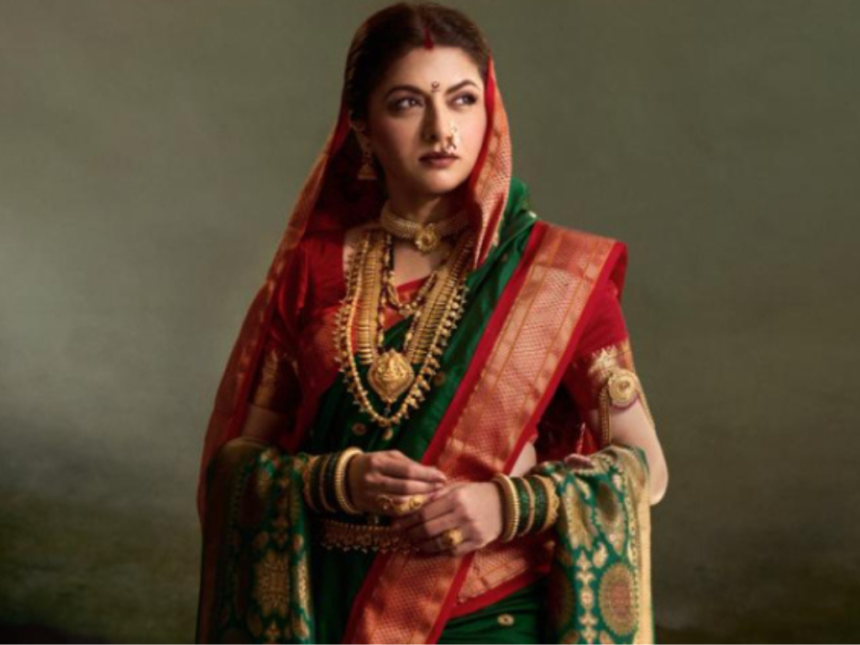
Bhagyashree, who plays Rajmata Jijabai the mother of Chhatrapati Shivaji Maharaj in the film, recently opened up about what made this role impossible to refuse. Speaking to Variety India, the actress revealed that her decision was made the moment Riteish walked through the door.
“Riteish called me and said he is making a film based on Shivaji Maharaj and that he wanted to meet me. The moment he walked in the door, I said, ‘Whatever it is, it’s yes.'”
— Bhagyashree
Riteish, however, was not going to let her skip the story. He insisted she hear the narration in full — and what was supposed to be a short meeting turned into something far more memorable.
“He insisted that I listen to the subject. So he sat down to narrate two scenes, but the intensity was so great that I couldn’t stop listening and he couldn’t stop narrating. We just sat there for four hours,” Bhagyashree recalled.
Why this story matters beyond the screen
Bhagyashree made clear that Raja Shivaji is not simply another period film. For her, it carries the weight of a history that every Indian has grown up knowing but rarely seen told with emotional honesty.
“Raja Shivaji is not just a film. It’s special for all of us because we are so rooted in our history. In school history books, we learned about the wars fought by Maratha warriors,” she said.
She also spoke about the enduring relevance of Chhatrapati Shivaji Maharaj in Indian history. “Shivaji Raje is such a historic person in Indian history, that without him, it wouldn’t have been possible for us to stand up to the Mughals. He’s the one who embodied what Swaraj stood for and that is relevant even today.”
What drew Bhagyashree to Rajmata Jijabai
Playing Rajmata Jijabai was never going to be just about period costumes or dramatic dialogue. For Bhagyashree, the role represented a chance to shine a light on the strength and political wisdom of women in that era qualities that she believes are still deeply relevant today.
“Women in those times, especially Maharashtrian women, held a status nearly equal to men. They were involved in the politics and everything happening around them. Rajmata Jijabai was the embodiment of that.”— Bhagyashree
She drew a direct line between Jijabai’s life and the reality of modern working women. “Today’s women can look up to her as someone who can manage her household as well as matters of the state. It doesn’t make you less of a woman, nor does it make you more of a man. It just brings out the strength of what a woman is capable of doing.”
Riteish’s vision: emotion over spectacle
What sets Raja Shivaji apart from other historical dramas, according to Bhagyashree, is the deliberate choice Riteish made to tell this story through the lens of family rather than warfare.
“He told me, ‘I’m not making a war film or an action film. I’m making a film about a man who wanted his family to taste independence.’ That’s such a beautiful thought.”— Riteish Deshmukh, as recalled by Bhagyashree
This is a vision that clearly resonated with Bhagyashree from their very first meeting — and it is what she believes will set the film apart for audiences who come expecting battles but leave thinking about freedom, family and sacrifice.
A role that stayed with her long after the shoot
Bhagyashree admitted that stepping into Rajmata Jijabai’s world gave her a perspective on sacrifice and courage that extended well beyond the film’s story. She connected the emotional core of the film to a very present reality.
“This also happens even today when jawans have lost their lives. I think that really stayed with me,” she said.With Raja Shivaji, Bhagyashree believes audiences will experience more than a historical spectacle. It is, she says, a deeply human story about a mother, a son, and what it truly means to fight for freedom.