




Mumbai Then vs Now: From the 1950s Vision of “Good Manners” to the City That Never Slows Down
Mumbai, often called the “city that never sleeps,” has long been a symbol of ambition, movement, and relentless energy. Days blur into nights, and months pass in a continuous rhythm of trains, traffic, and dreams. But a recently resurfaced 1954 documentary titled Good Manners, produced by the Films Division of the Government of India, offers a striking contrast to today’s fast-paced metropolis—revealing a vision of a slower, more considerate urban life.
The clip, shared by the Instagram page Mumbai Heritage, founded by Kunal Tripathi, has revived nostalgia and debate about how much the city has changed over the decades. It paints a picture of a Bombay that once aspired not just to grow, but to move gently, thoughtfully, and with courtesy.
A city once imagined differently
The documentary opens with a philosophical note: “A nation’s culture is a measure of its maturity.” It goes on to explain that culture is reflected in daily behaviour—how people treat one another and their surroundings.
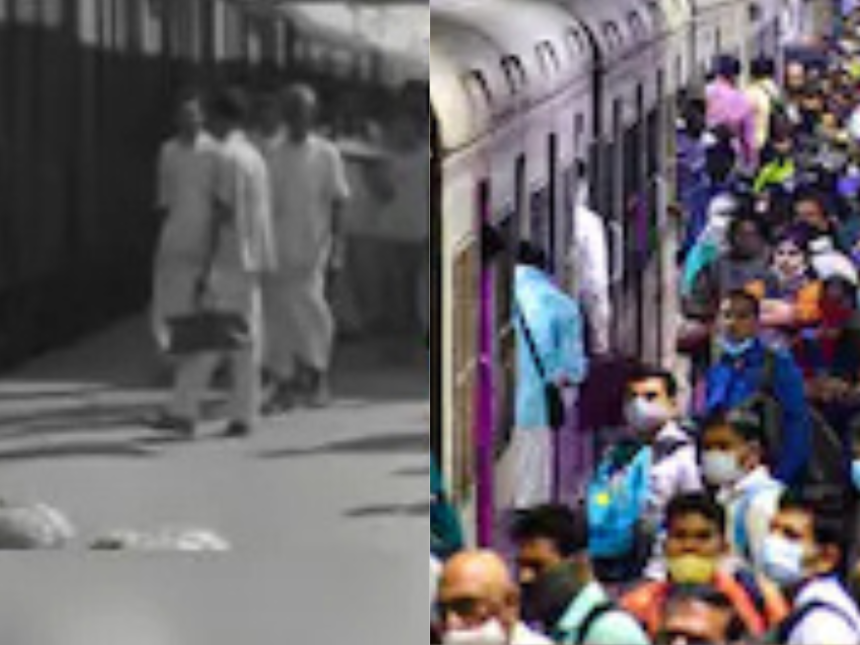
Through staged scenarios, the film highlights everyday examples of both good and bad manners. It shows individuals being rude in offices, ignoring elders or customers, and behaving carelessly in public spaces. One scene captures a man in a suit sleeping in a train with his feet placed on another seat, symbolising disregard for shared public etiquette.
At the time, overcrowding was already a concern, but the narration makes a clear distinction between necessity and negligence, reminding viewers that inconvenience does not justify disrespect.
Everyday etiquette in focus
The documentary also turns its attention to social behaviour in restaurants and public gatherings. It depicts people drinking tea noisily from saucers, yawning without restraint, speaking loudly in shared spaces, and eating with their mouths open. Even actions such as spitting in public or talking while chewing food are highlighted as examples of poor manners.
While the tone may appear strict by modern standards, the underlying message is clear: a functioning society depends on mutual respect and consideration.
The contrast of “good manners”
Also Read :- https://youtu.be/UEQ24lIGaa0?si=luoC_Ma3mg_h2aoE
In contrast, the film presents ideal behaviours—passengers giving up seats for women with infants, younger individuals offering seats to the elderly, and bus conductors showing courtesy to senior citizens. These scenes reinforce the idea that empathy and patience are the foundation of a well-functioning city.
The narrator draws a simple yet powerful analogy: just as oil reduces friction in machines, courtesy keeps society running smoothly.
Mumbai today: a city in constant motion
Fast forward to present-day Mumbai, and the transformation is unmistakable. The city has evolved into one of the world’s most dynamic urban centres—driven by its financial markets, entertainment industry, and endless influx of people chasing opportunity.
One of the most iconic reflections of this fast life is the emergence of vada pav, a snack designed for speed and convenience, consumed on local trains, buses, or even while walking through crowded streets. It symbolises a city where every second counts and pauses are rare.
Influencer Ganesh Vanare captured this sentiment in a viral post, describing Mumbai as “not just a city… but a million emotions in motion.”
A city that grew, but changed its rhythm
The comparison between 1950s Bombay and today’s Mumbai is not just about manners—it is about tempo. The earlier vision, as seen in Good Manners, imagined a society that prioritised patience, order, and reflection. The modern reality is one of speed, survival, and constant movement.
Yet, both versions of the city share a common thread: resilience. Whether slow and deliberate or fast and chaotic, Mumbai continues to adapt, absorb, and evolve.
In many ways, the city did not lose its pause button—it simply learned to function without one.